The Prime Minister may be well on the way to getting asset sales through a future National-led coalition government.
This will be despite what has always been New Zealand First’s opposition to sales.
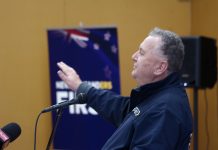
But though NZ First Leader Winston Peters was full of bluster and even a conspiracy theory yesterday opposing asset sales, he is now surprisingly refusing to say opposition would be part of any New Zealand First coalition negotiations, bottom line.
It’s not that he is against nominating bottom lines a year out from the election.
His refusal comes in the same week that he announced a fireworks ban would be a bottom line.
And by refusing to mandate a blanket ban, he opens the way for a future National-led Government to undertake either sales of selected assets or even achieve a broad mandate for sales of any asset.
ACT would support that.
Meanwhile, the Prime Minister has declared his own support with the qualifier that no sales will take place during the term of this Government.
The debate has popped up because the Treasury, last Friday, in its Investment Statement, made the case for actively managing the Government’s asset portfolio.
The statement valued the Crown’s commercial assets at $100 billion.
That valuation is dominated by two of the gentailers, Meridian and Mercury and then the 51 per cent shareholding in Air New Zealand, along with Kiwibank, Landcorp and Transpower.
Treasury Secretary Iain Rennie said the Government needed to look very closely at the performance of assets in the portfolio, to think about the ways in which the Government could enhance the performance of those entities.
“So as a message for government, because of the size of these commercial entities, this hundred billion dollars, there is a need to regularly review the performance of that part of the balance sheet, including the objectives of Crown ownership,” he said.
He said that would require the Government to clarify the purpose for which it was continuing to hold those entities or think about a framework in which some or all of the capital in those entities could be put to better use elsewhere.
Luxon has picked up on this, along with the policies of the Singapore Government Investment fund, Temasek, which buys and often sells assets in an actively managed portfolio.
“We have to take a step back and I think actually have a bigger, bolder, braver conversation, and a sophisticated conversation, about asset recycling in the sense of you don’t just own the asset forever without questioning why you’re owning it,” he told his weekly media conference on Monday.
“Particularly when you look at places like Singapore, at the assets they had in the early 70s versus the assets they have today.
“They have sold assets in order to buy new assets that actually have more advantages, better returns for their citizens and for their people.
“That’s a legitimately good question for us to ask.”
This is also subtly different to what Treasury asked for and quite different to what both Labour and National did in the 80s and 90s as far as asset sales went.
The Treasury and the earlier Governments have advocated asset sales so that the proceeds could mostly go towards paying off debt.
But Luxon is not saying that. He is proposing to “recycle” the proceeds like Temasek does.
The Prime Minister’s comments have provoked predictable knee-jerk responses from both Labour and New Zealand First Leader, Winston Peters.
Former Labour Prime Minister Helen Clark sees the issue as a main divider at next year’s election.
“Battle lines for NZ 2026 election drawn on asset sales,” she posted pn “X” last night.
“Very hard to believe that cash from assets realised would be reinvested into new state companies.
“Remaining companies in govt ownership have survived there so far because there’s a rationale for that.”
The current Labour Labour Leader Chris Hipkins immediately claimed that Luxon was proposing the sales because he had failed to manage the books, “so he is reverting to type, turning to selling off the family silverware to fill the hole in his budget.”
(ACT Leader David Seymour pointed out to journalists yesterday that even the term “family silverware” was a relic from the 1980s.)
“Labour will protect what we own together and invest in New Zealand’s future,” said Hipkins.
“Through the New Zealand Future Fund, we’ll grow jobs and wealth here at home, while keeping our assets in Kiwi hands.”
Hipkins has likened the Future Fund to Temasek, but his prohibition on it actively managing its portfolio means it would be a much weaker version of Temasek.
To an extent, he has changed his tune.
Government MPs in Parliament yesterday were happy to point out that the last Labour Government, in which Hipkins was a senior Minister before he took over as Prime Minister, had sold Kiwibank’s KiwiSaver business in 2022 to Fisher Funds for $310 million.
Peters has a more convincing record opposing asset sales and often accompanying that opposition with a conspiracy theory which he did yesterday with a claim that there was something odd about the KiwiBank sale.
He ticked off a list of sales he had opposed returning to the purchase by a Fay Richwhite entity of shares in the BNZ in 1989.
“We’ve the principles and we stick up for them and we fight for them,” he said.
But pressed whether that fight would include making opposition to asset sales a bottom line in any coalition negotiations, he went on the offensive.
“I don’t conform to your stupid questions about how I’m going to conduct negotiations when it comes to coalitions,” he said.
“I’m the most experienced guy doing that as well, and I don’t need your advice, thank you very much.”
(He was answering a question from POLITIK).
However, he has declared that banning fireworks would be a bottom line.
“We don’t usually do bottom lines, but this logical, plain common sense, supported by so many New Zealanders, is going to be a bottom line, of course, and we’ve got a stack of other bottom lines as well,” he told Stuff last week.
So, if he could make a fireworks ban a bottom line, why couldn’t he make opposition to asset sales?
“If you turn that into day after day, there will be boring questions, is that a bottom line? Is that a bottom line. And I’ll make one thing, certain. I’ve had a more difficult career than anybody in this damn Parliament. And I’m never going to take advice on how I conduct my politics,” he said. (again, to POLITIK).
But cutting through the bluster, what is important about Peters’ response is that he is refusing to confirm he would include opposition to a ban on asset sales in any future coalition negotiations.
The current coalition agreement between NZ First and National does not mention asset sales, but the commitment by Luxon not to undertake any is founded on the assumption that NZ First would oppose any specific asset sale put in front of the Cabinet.
Now, Luxon is looking for a mandate for sales, and it would seem likely that it would be him demanding that support for sales be included in any coalition agreements after the next election.
New Zealand First’s only alternative to agreeing to this would be to cross the floor and enter into a coalition with their fellow asset sale opponents, Labour.
This has been uncharacteristically hardball politics from Luxon, but it is politics which will encourage his party base and the business sector at a time when his performance is coming under increasing scrutiny from those two sectors.