The warnings from the Treasury about the state of the country’s finances are starting to appear on a regular basis.
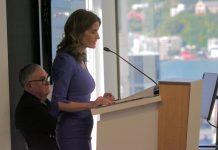
So far, they have been delivered by Treasury’s Chief Economic Advisor Dominick Stephens, and yesterday, he faced the Finance and Expenditure Committee to answer questions on Treasury’s long-term thinking about the economy.
Once again, he was pointing to next year’s Long Term Fiscal Statement and not-so-subtly suggested that it would show that the Government is simply spending too much for the revenue it gets and that this situation will worsen as time moves on.
Along with the new Treasury Secretary, Iain Rennie, the pair made it clear the Government faced a choice; either it could raise taxes or cut entitlements like New Zealand super.
“In terms of some of the comparisons we’ve looked at for anything. New Zealand has kept expenditure relatively high compared to many of our comparators who actually unwound that spike faster than we have,” the new Treasury Secretary Iain Rennie told the Committee.
Treasury economists use a measure they call the “Fiscal Impulse” to determine whether government fiscal policy decisions are adding to or subtracting from aggregate demand pressures in the economy.
The greater the impulse, the more likely whatever caused it to grow will also stimulate higher inflation.
“Over the long run, you need to run a balanced budget,” said Treasury’s Chief Economic Advisor Dominick Stephens.
“The larger the public sector, the more impact it has on the size of the private sector.
“So over time, it needs to be paid for through revenue, which the private sector pays for.
“In the short run, the pace at which the government moves from deficit to a balanced budget does matter for the fiscal impulse.”
However, Stephens said the Treasury normally considered the Reserve Bank and interest rates to be the main vehicles for ensuring overall economic stability.
“So the faster that the Government consolidates and returns to surplus now, the faster the Reserve Bank is able to reduce interest rates to ensure a balanced economy overall.
“If the Government delays the return to surplus, the Reserve Bank will keep interest rates higher for longer.”
That Treasury officials are continuing to say this in public suggests that they are worried the Government is not committed to returning to surplus as rapidly as the Treasury believes it should.
Stephens repeated his message from his speeches.
“If policy doesn’t change, we’re on an unsustainable trajectory over time,” he said.
“We’ve also shown various policy options and what would be required to balance budgets over time.”
One policy option that will be particularly unpalatable to the current Government is finding a way to raise extra tax revenue.
Stephens said the Treasury had developed the capability to model the amount of revenue required over time and how the economy would respond to the changing incentives that additional tax revenue would bring.
“Because when you tax people, they change their behaviour,” he said.
“So we would be able to model the behavioural response to the increase in taxation should that be part of the mix and how that would be distributed across generations.”
He said this would “absolutely” be part of the next long-term fiscal Statement next year.
What is happening at the Treasury is reminiscent of the Muldoon years, when Treasury officials found ways to publicly challenge his economic policies.
Including a model of the impact increased taxation would have on the Government’s long-term fiscal position is unlikely to be popular with the current Government, particularly if it follows previous editions of the four-yearly Long Term Fiscal Statements and appears in September.
That would be around a year from an election campaign which will likely feature tax at its centre, with Labour probably proposing a capital gains tax and National opposing that and any other new taxes.
Superannuation is another issue that is inextricably linked to the long-term fiscal balance.
If a government didn’t want to raise taxation, it could cut super or even boldly do a “Ruth Richardson” and hack into welfare entitlements.
But superannuation is the biggest and most obvious target.
This year’s Budget Economic and Fiscal Update forecast that New Zealand superannuation would increase in cost by an average of 6.6 per cent per year over the next four years until 2028 when it will make up 14 per cent of all government spending.
Labour’s finance spokesperson, Barbara Edmonds, was sceptical about the political feasibility of cutting super.
“Good luck to anybody that wants to say in the future around superannuation who should and shouldn’t get it,” she said.
“But around the saving side, that is something that we could encourage more.
“How much are you thinking about that, particularly in relation to the likes of KiwiSaver, the Super Fund?”
Rennie said the Statement’s statistics would provide thebackdrop.
“And then off that a series of policy directions,” he said.
“Obviously, you know, governments will pick up those leads or will not pick those up.
“I think we’ve faced the retirement income conundrum in New Zealand for a very long time now.
“I think that the way forward, if there is a way forward, is going to have to encompass both what you call the first pillar, which is essentially KiwiSaver, as well as the public provision, the New Zealand superannuation.”
So, as far as the Treasury is concerned, both Kiwisaver and New Zealand Superannuation are on the agenda.
But Rennie warned that how the burden of funding was carried was really important.
“For example, you could say, well yes, let’s crank up KiwiSaver, but you then have to say, well, actually, if you can’t get KiwiSaver, are you also asking younger workers to have their taxes cranked up to fund New Zealand superannuation for older cohorts?
“So there are some quite tricky transition issues that I think governments will need to think through.
“But in principle, I think going forward, it’s something that we will be thinking about in the round.”

Stephens introduced the Committee to the cyclically adjusted balance which is what the Operating Balance before Gain and Losses (OBEGAL) – the most usual measure of a surplus or deficit – would be if the economy was operating at a normal level of activity.
At present with the economy operating at below its normal level, the balance is distorted by extra expenditure on things like unemployment benefits while revenue is depressed because companies are less profitable during a recession.
So the cyclically adjusted balance shows where the OBEGAL balance would be if the economy was operating at a normal level and we weren’t in a recessionary environment.
“It’s telling us that the government is running a sustained deficit that will essentially not go away without action, that is, the deficit will not necessarily disappear as the economy normalises,” Stephens said.
It is a grim warning, and the Treasury plainly wants a debate to begin about what sort of action the politicians would agree to in order for the cyclically adjusted balance to move from deficit to surplus.