Finance Minister Nicola Willis wasted no time yesterday putting the boot into New Zealand First Minister Shane Jones over his travel expenses.
Willis was responding to questions about Jones overshooting a travel budget to attend a conference in Toronto.
He ended up spending nearly $63,000, even though the budget was $33,068.
Willis’s response bordered on the pious.
“I think we should stick to budgets,” she said.
“And when Cabinet sets a budget for international travel, I take that very seriously. I would expect all ministers should take that very seriously, including Mr Jones.”
Willis’s response was the visible sign of much more fundamental gaps that are opening up between National and its coalition partners.
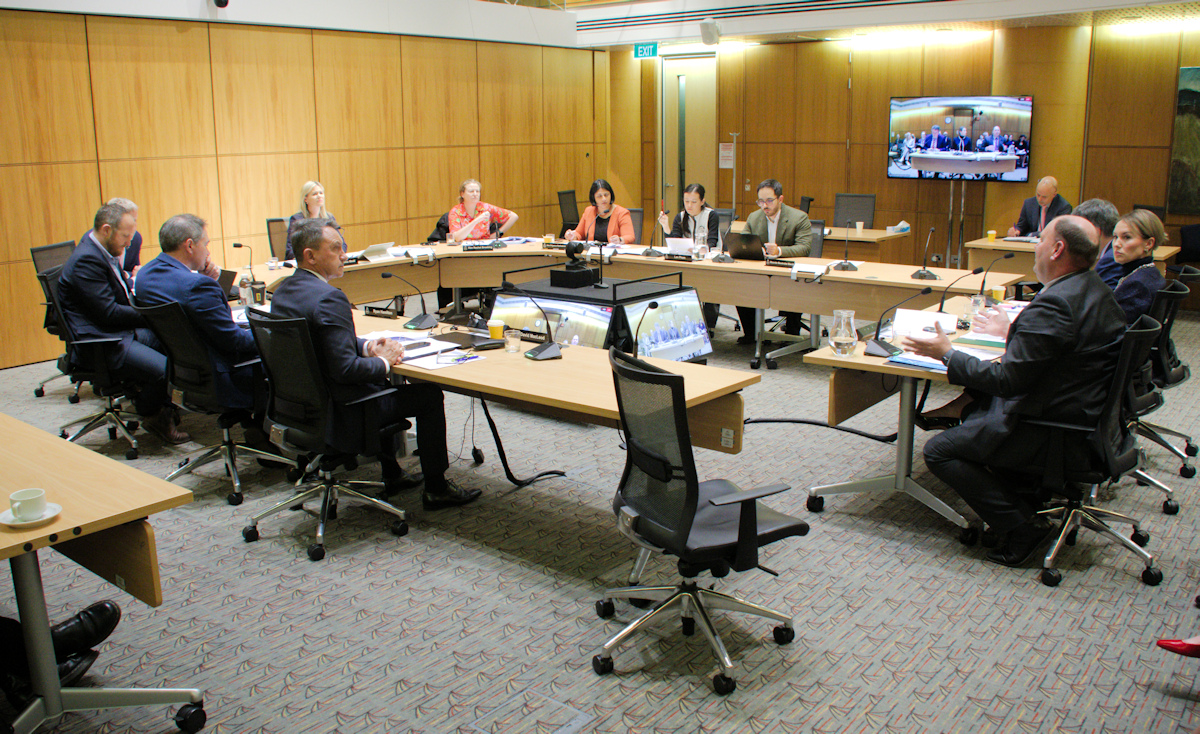
There was more evidence of that at the Environment Committee yesterday over the vexing issue of climate change and farming.
New Zealand First now wants New Zealand out of the Paris Agreement altogether, while ACT wants it fundamentally re-negotiated, and if that can’t be done, it wants out.
“What I’m saying about the Paris Accord is that it’s over, it’s finished, it is a waste of our time. And we are not going to go along with it,” NZ First Leader Winston Peters said on The Country last week.
However, Climate Change Minister Simon Watts yesterday made it very clear to Parliament’s Environment Committee that not only was National on course to achieve reductions in farm methane emissions, but that it would also meet its Paris targets.
It is becoming abundantly clear that National would not give in to its two support parties on Paris during any coalition talks that might happen after the election.
It can’t afford to if it is to win the urban vote, which is now placing climate change as a top ten issue.
National has seen what has happened to its centre-right counterpart, the Liberals in Australia, who have lost seven seats to the climate change activist independent Teal MPs.
It is therefore not surprising that National’s climate change position is closer to Labour than it is to NZ First or ACT.
But there is one important difference between National and Labour.
National, at this stage, sees no need to impose a levy or tax on methane emissions as a lever to force farmers to reduce them.
And despite the apocalyptic warnings coming from NZ First and ACT about how reducing emissions will reduce the profitability of farming, National believes the opposite.
Climate Change Minister Simon Watts yesterday told the Committee that he hoped the tech solutions being developed in New Zealand to reduce methane emissions might become a new export industry themselves.
“The biggest challenge is when you think about who has the largest dairy herd in the world, which is India and other jurisdictions like that, how New Zealand can actually play to our strengths as an R&D innovator and share that technology with other countries,” he said.
“It is quite exciting around the opportunity of New Zealand playing a leadership role around technology that not only increases productivity and economic gain for farmers, first and foremost, but the secondary benefit of that is a reduction of emissions.”
To that end, the Government has just invested another $41 million in AgriZero, a joint government-private sector organisation committed to finding tech solutions to agricultural emissions.
The problem facing the Government is that while it is on track to meet its local Emissions Budgets out to 2025, it is not on track to meet its Nationally Determined Contribution out to 2030.
There is an estimated gap of approximately 99 megatonnes of CO2 equivalent gas (Mt CO2-e) to 101 Mt CO₂-e between the total allowable emissions in New Zealand’s second domestic emissions budget (EB2) and its international 2030 Nationally Determined Contribution (NDC).
Technically, this doesn’t matter.
The NDC is neither binding nor enforceable.
But not meeting it would seriously erode the claim to climate change leadership that successive New Zealand Governments have made.
The Climate Change Commission has always said we would need to purchase offshore carbon credits to meet the target, but last week Treasury costed those purchases at between $4.4 and $5 billion.
Peters believes the costs could be much higher, though he has yet to produce any evidence to sustain his figures.
“There’s $22 billion coming out of our economy to try and correct our responsibilities to the Paris Accord,” he told The Country.
“That’s the worst-case scenario. And can we afford that? No, we can’t”
Just as his claims about the India Free Trade Agreement are distorted, so are his claims about Climate Change.
The problem is that it appears at this stage that both issues are going to be central to his election campaign.
On Sunday in Cambridge, he linked the two, noting that the Paris Agreement was referenced in the Free Trade Agreement.
But if National is under siege from its two right-wing coalition partners on the Paris Agreement, it is under attack from the left over its failure to rigorously pursue emissions reductions.
The most notable example of this is the apparent collapse of the Emissions Trading Scheme (ETS) auction market, which, once again, last week recorded no bids for 1.3 million units on sale.
The reason is simple; the floor price at the auction was $71, but units on the secondary market are selling for $51 – $54.
Watts told the Committee that the current secondary market prices were not sufficient to achieve the climate change goals the Government wanted.
“We want a credible ETS market in order to do the heavy lifting around emissions reduction,” he said.
Watts said the Government was currently consulting on settings in the ETS market, but he said that internationally carbon prices were volatile at present.
“The price on the market has returned to levels comparable to where they were prior to the Climate Change Response Act (CCRA) amendments announced in November of last year, and the other factor in play in the New Zealand market is the forestry supply and demand,” he said.
“And there is a degree of uncertainty in regard to that aspect, which does have an impact on future prices. “
Ideally, the Government would simply encourage as much forest planting as possible to provide the offsets to enable it to meet the NDC targets.
But National’s strong farmer base opposes that.
The new Associate Minister of Agriculture, Mike Butterick, was one of the founders of a lobby group called 50 Shades of Green, which was set up to oppose the afforestation of hill country for carbon credits.
“The general point is that there are trade-offs that any policy decision-makers have to weigh up when considering the role of forestry and volume of forestry within the ETS,” said Watts.
“Forestry can help to reduce the cost of transition, but as others have pointed out, it comes with some trade-offs that will need to be considered carefully.”
So the Government is in danger of getting painted into a political corner.
It can try to maintain its climate change credibility by rejecting the policies of ACT and particularly NZ First, but that will be only half the story.
It will still have to find a way to maintain credibility, particularly with the urban voters who rate climate change as a major issue.
The May Ipsos NZ Issues Monitor showed climate change as issue 9 of the 20 most important issues facing the country.
It was above education, transport, immigration, taxation and race relations as an issue.
So it is in National’s political interest to put the boot into NZ First on climate change, but will that be enough?