The Prime Minister will unveil more of his economic growth plan today as it becomes clear that the plan is central to National’s election pitch in 2026.
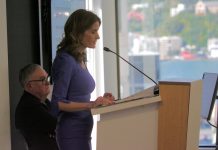
Christopher Luxon will address an Auckland Chamber of Commerce meeting with what is being billed a “State of the Nation” speech.
Ironically, after the speech, he will be questioned by his predecessor, the Chamber’s CEO, Simon Bridges.
Bridges has recently made it clear that he wants the Government to focus not just on fiscal issues but apply more energy to encouraging and, if necessary, incentivising growth.
He is not alone.
New Zealand First is making the same argument.
And National’s backbenchers are saying similar things, albeit more subtly.
They say this is the year when the Government will be judged on whether it can deliver growth.
Luxon himself is sending the right signals, saying that getting greater economic growth is why he entered politics.
In effect, he is now pinning his political future on the Government’s kick-starting of the economy so that it delivers better growth in the 2 – 3 per cent range forecast for June next year.
“This is about us realising our own future and our own potential.” He told reporters at his party’s Caucus retreat in Hamilton yesterday.
“This is a fantastic country with huge potential, and we now need to go to work and realise that.
“That’s why I came to politics four years ago. I think New Zealand can be a lot better. I think we can be a lot wealthier.”
Luxon told the media that he and a group of Ministers had been working on an economic growth plan for the past six months.
A big focus of that plan will be attracting foreign investment, and he will announce today that Todd McClay has been appointed Minister in charge of attracting foreign investment and dealing with the investors once they commit.
POLITIK understands that he will be assisted by NZTE, which will undergo a slight refocus to make attracting investment a priority.
There will be an investment summit presided over by Luxon in March, with invited overseas potential investors in Auckland.
However, from the few hints dropped yesterday, it seems the initial focus of the investment drive will be infrastructure, particularly roads.
“We have to make sure we’ve got modern, reliable infrastructure in this country,” Luxon said.
“In order to do that, we are going to use international pools of capital as well as domestic pools of capital.”
A Treasury study published last November indicated that any private capital employed in an infrastructure project might not mean that the provider received any income from the project.
“In the short term, we expect that most projects proposed for PPP procurement will be unlikely to derive sufficient third-party revenue streams to support the full cost of delivering, operating and maintaining the required infrastructure,” the report said.
Whether that would mean the Government’s pitch to foreign investors would be as attractive as the Prime Minister might hope is a relevant question.

Nicola Willis will preside over the group of Ministers who develop the growth agenda, and she is planning to consult with businesses to get more ideas.
“We are going to be making continuous announcements as part of the economic growth plan,” she said.
“I will be pulling together the current program of activity and testing it in two ways: one, making sure we’re prioritising the things that need to move fast.
“And two, engaging with small business owners, with industry leaders, with innovators, to say, here’s what’s currently in the plan; what would you add? what would you accelerate? what would you stop?
“And so that will be my role for these coming months.”
But Willis faces an internal tension in her new role. As Finance Minister, she is addressing New Zealand’s medium-term fiscal situation, which currently shows no return to Budget surplus (using the traditional measure) over the current forecast period out to 2029.
Simon Bridges has argued that it may now be time to take the focus off those fiscal numbers and concentrate on growth instead.
“For Government, this means boldness in reform, a strong growth plan, and investing where there is a clear business case for doing so,” he wrote in the NZ Herald last week.
That proposal that the Government should invest in business has always been anathema to the post-Muldoon National Party, which has had successive Finance Ministers declare that it would not pick winners.
However, New Zealand First, with its proposal for a $1 billion Temasek-like business growth fund, holds a very different view.
And yesterday, Luxon seemed to be bending in that direction.
“You’ll hear us talk more about how we plan to operationalise the science and technology systems so that we can get better businesses and bigger businesses in place,” Luxon said.
“But we will continue to support entrepreneurs who actually can get that breakthrough and get that start and get away and actually build their business out from there.”
He might expect to hear more about this during his Q+A session with Bridges today.
“Simply focusing on the Government’s fiscals as so many are doing today is only slightly better than thinking that stopping the fancy biscuits at the company board meetings is going to turn things around (yes, I am being flippant). It won’t,” Bridges wrote.
“Saying goodbye to the Tim Tams – or indeed all the Government’s billions in wasteful spending – won’t be enough to stop us also saying goodbye to our young and talented and nor will it stem our ongoing relative economic decline.
“We must all relentlessly, urgently pull finger and go for growth.”

But just what the Government can or should do throws up all manner of complexities.
In August, two central North Island timber mills, one a sawmill and the other a pulp mill, closed because of persistently high electricity markets.
Those closures led to calls for reform of the market.
Luxon agreed with that yesterday but said the way to do it was through increasing competition.
The problem facing the Government is that the largest players in the electricity market are the Government-owned so-called gentailers.
The fiscal situation requires that Willis extract every last dollar she can from them.
An NZCTU study in 2022 found that the gentailers paid $8.7 billion in dividends between 2014 and 2021. Half of that would have gone to the Government.
Any attempt to restructure the electricity market that led to lower prices and, therefore, lower dividends going to the Government would be a direct fiscal cost.
Willis is going to have to wrestle with these kinds of questions.

As far as the National’s Caucus is concerned, as they look towards an election next year, what they want is actual achievements.
Waitaki MP Miles Anderson told POLITIK that his electorate wanted to see results, though they were pleased with things like the Resource Management Act reforms and the Fast Track legislation.
But: “I’d be lying if I said that the Dunedin hospital wasn’t interesting to the voters in my electorate.”
Cameron Brewer, MP for Auckland’s Upper Harbour, echoed Anderson, saying his voters wanted delivery.
“I think the public is expecting us to move into the delivery phase as far as our major campaign platforms go,” he said.
Brewer said he believed the Caucus wanted to see “a real laser-like” focus on the economy “that the prime Minister was clearly articulating and that the Caucus are wholeheartedly behind.
“Because, as we know, if we don’t have that economic growth, we’re only going to see more New Zealanders leave offshore to find it in other countries.”
POLITIK believes there is a solid consensus within the Caucus that growth should be the priority which is what Bridges picked up on from his widespread contacts within the Caucus.
That may provoke some tensions with ACT, which might prefer to focus on the fiscal situation.
But the politics are simple; the National MPs believe that growth is the answer and they expect Luxon and Willis to deliver it.
Otherwise!!!