Sir John Key and the NZME media empire are busy blaming the Reserve Bank for the surprising GDP figures unveiled last Thursday.
The Bank, thanks to the revelations about its bloated staff numbers and then devious cover-up of the reasons for Adrian Orr’s resignation, is not in a position to mount a defence that anyone would believe.
But Key and MZME are wrong.
Key knows the Bank’s remit well enough to understand that his calls for it to stimulate the economy are essentially asking it to do something that is not within its job.
An NZME editorial on Saturday, and hyper-ventilating from Newstalk ZB’s two-star host, Mike Hosking both blaming the Bank for the recession, might be historically correct in that what the Bank did undoubtedly made the recession worse. However, they ignore a fundamental and straightforward fact.
The Bank’s job is to control inflation.
Its current remit, signed off by Willis in December 2023, says its operational objective is to “achieve and maintain future annual inflation between one and three per cent over the medium term, with a focus on keeping future inflation near the two per cent mid-point.”
The remit also sets out two secondary objectives:
“In pursuing the operational objective, the MPC shall have regard to the importance of protecting and promoting the stability of New Zealand’s financial system; and seek to avoid unnecessary instability in output, employment, interest rates, and the exchange rate.”
There is no mention of economic growth.
All the focus on the Bank draws attention away from Ruth Richardson’s old adage that monetary policy must have fiscal mates.
In other words, it is no use the Beehive looking across Bowen Street to the Bank and having a go at it.
The Beehive is the master of the economy’s destiny.
The trouble is that this Wednesday, the Treasury will publish the Long Term Fiscal Statement, a survey published every four years which looks well out into the future on the fundamental fiscal situation, particularly the deficit and borrowing requirements.
We already know what its message will be.
Unless the Government can begin to address spending on super and health, or find more money to fund those two budget areas, or even another way to fund them, the country will be headed by 2060 into unsustainable deficits and borrowing.
Some commentators, such as the former finance minister Ruth Richardson, have foreshadowed the statement with warnings that only fiscal cuts will satisfy the challenge.
But Treasury itself has been more subtle.
In a major address to the University of Waikato Economics Forum in February, Treasury Secretary Iain Rennie said that economic growth and fiscal sustainability were intertwined.
“Achieving higher productivity means New Zealanders’ real incomes will be rising over time, as will our national incomes and our ability to fund effective public services that citizens deserve,” he said.
“Rebuilding our fiscal resilience will be crucial to give ourselves the breathing space to address the long-term sustainability of current revenue and expense settings created by population ageing.’
Rennie listed four areas where he thought New Zealand was lacking.
We had a relatively low capital investment per worker; foreign investment was below the OECD average; spending on research and development was low compared to our peers; and our markets were often subject to weak competitive discipline, and prices were high by international standards.
The Government has begun addressing every one of those challenges in recent months.
But, as might be expected with long-term reform, it has little to show for its efforts.
However, there is still the fiscal ledger, which will be the focus of the statement on Wednesday.
And this is where the situation becomes much more political.
POLITIK understands that the three coalition partners are debating whether to “pivot” away from the strict fiscal discipline that Willis has imposed on the Government and loosen the current Government spending restraints.
It would be reasonable to assume that ACT would be opposed to that, and New Zealand First would be in favour.
And since any pivot would almost certainly require a new finance minister, it would seem from the endorsement of Willis by Luxon on Friday that he, too, is opposed.
However, the Long Term Fiscal Statement is likely to show that the Government will not achieve its fiscal objectives, even with the self-denying discipline that ACT, Luxon, and Willis continue to advocate.
Rennie hinted at this in his February speech.
“I want to emphasise that based on what we know about the longer-term trends and experience from other countries, simply limiting spending growth in the short term and delivering existing services more efficiently will not be enough,” he said.
“Achieving medium-term fiscal sustainability will require choices by successive governments, which look at the underlying policy settings that are the sources of growing cost pressures and transfer spending, or consider more sustainable ways to fund them.
“Past consolidations have tended to require sustained effort; and have typically required a mix of policy measures to increase revenue, reform transfers and subsidies, promote efficient use of the Government balance sheet, and reduce government consumption.”
In other words, the Government will need to look at tax.
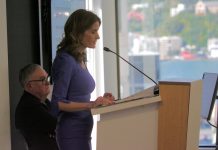
To that end, last Wednesday, the Treasury hosted a talk by Michael Keen, a former Deputy Director of the Fiscal Affairs Department at the International Monetary Fund, where, for over twenty years, he played a central role in shaping and delivering IMF policies and advice on tax matters.
He is now Ushioda Fellow at the University of Tokyo.
Keen referred to the previous Long Term Fiscal Statement, which showed the net of tax cost of New Zealand Superannuation would grow from 4.2% of GDP in 2021 to 6.4% of GDP by 2061 if current settings remained in place.
Projected health expenditure would increase from 6.9% of GDP in 2021 to 10.6% of GDP by 2061.
“We need a chunk of money,” he said, if these increases were to be financed.
He suggested that one possibility to raise this money could be a “dual” income tax.
“The basic idea is you have a progressive tax on labour, but a low, probably flat tax, on capital income,” he said.
“So you no longer try just to add everything up and apply the tax to the total.
“You actually have a system where you try to tax labour income progressively and capital income at a relatively low flat rate.”
He is talking about a capital gains tax and interestingly suggested it should be a tax on unrealised gains.
“A lot of the most wealthy people get their income from capital gains,” he said.
“And a large part of their wealth will be unrealised capital gains.”
The problem for the Government is that if it relies only on limiting its spending, it will have fewer tools to counter recessions, such as the one we are currently experiencing.
It has resolutely ruled out any new taxes this term, and it is lining up to attack what looks like being a Labour election proposal for a somewhat emaciated capital gains tax.
But if it can’t raise any more revenue, and the Reserve Bank does not have a mandate to stimulate the economy, then all the Government can do is cut spending.
That could well make matters worse. The Government has caught itself in an economic trap.